Showing posts with label old testament. Show all posts

Monday, August 27, 2018

You and the Greek New Testament: Devotional Values and Precautions


Image result for New testament greek text mssYou and the Greek New Testament: Devotional      Values and Precautions
I would like to provide to you two forms of exhortation (especially to pastors of local churches). One, in the form of a sermon.  The second, in book form. Personally I try to use my Greek NT on a fairly regular basis just to the languages flowing. It has also by way of personal testimony produces immense blessings reading God's word in its original language. The blessing of mining out vocabulary, word usage, grammar and syntax to say the lease simply can't be replaced with an English translation.
As to the first, I would encourage you to listen to Dr. Randy Leedy's presentation "A Deeper Devotion through a Greek New Testament."  That link can be found here located on the Mount Calvary Baptist Church Website.  This presentation was delivered during their 2018 Whetsone Conference. Exceptional presentation and heart warming challenge for pastors and laymen to use their Greek New Testaments.  It even includes some pointers (examples) of using Bible software for this task.  
The second exhortations is found in Dr. David Black's textbook Using New Testament Greek in Ministry: A Practical Guide for Students and Pastors. It is now over twenty five years since coming into print.  Three practical exhortations  concerning the decline in seminaries teaching or emphasizing study of the original languages are as follows: 
First, "the teaching of language tends to be dominated by content to the neglect of understanding" (p. 17).
Second, the decline in instruction results from "the enormous amount of material covered in the typical exegesis course" (p. 18). 
Third, the focus of teaching original languages should be "to prepare expository preachers of God's Word (p. 19). 
Finally, and I would suggest the most dangerous for the local church and Christianity as a whole, "the increasing tendency in education toward subjectivism" (p. 20). 
I hope these to sources are a challenge to you heart and daily devotional Bible reading. I also have provided a separate languages page for original language sources for both Greek and Hebrew. 
Read.  Comment.  Enjoy.


Friday, February 17, 2017

The Value of Septuagint Quotations in the NT in discussing the KJV 1611 Hebrew Old Testament Position

Septuagint Quotations in New Testament and the KJV 1611 Hebrew Old Testament Position

Series Part One           Series Part Two       Series Part Three  

One of the tenants of the KJV English Translation only position is the non-existence of the Greek translation of the OT (the Septuagint "LXX").  This line of defense is focused toward KJV only advocates who at least attempt an academic position based on the underlying Greek and Hebrew text.  At face value this might not make sense to the normal reader.  Here's the issue many (if not most) of the KJV only adherents believe that God providentially preserved the Hebrew manuscripts underlying the Old Testament.  It is this OT text that the NT writers and speakers quote.  This includes writers such as the Matthew, Luke, Paul, etc....  This would also extend to include Christ's own quotation of the OT.  

Of course, it goes without saying the KJV English only position has no value for the underlying Hebrew and Greek text and won't be bothered by this position anyway.  Their position is an English text only position.  This position is even farther from the historic position of Christianity for both inspiration and preservation.  This position seems to foster a following in churches where academics are discouraged and local church pastors just don't address this issue (exegetically or historically). 

Just by way of reminder many of the KJV only advocates who actually use the Greek and Hebrew texts deny the existence of the Septuagint.  It must be said (to be academically honest) not all adherents who believe God preserved the underlying Traditional Greek Texts deny the existence of the Septuagint.  For example, the very study Bible I use every day for reading, study and memorizing was published by a company that is strongly KJV in their position (both underlying Greek and Hebrew texts also).  At the same time they acknowledge the existence of the LXX and their notes on occasion point out the fact that the NT verses are quoting from the Septuagint and not the underlying Hebrew text.  So this is obviously something they are not ashamed of or threatened by in being academically honest.

So let's begin with some examples.  Just for sake of time (don't forget there are roughly 350 OT quotations) in the NT, we'll limit our discussion to the epistle of Romans.  But to be fair this same process could be repeated in any of the NT gospels or epistles quoting from the LXX.  If I counted correctly (you're welcome to count on your own), Romans contains 63 OT quotations (22 from the LXX, and 41 from the Masoretic text).  In all the NT, the LXX only makes up for about 20% of the quotations.  So its certainly not the normal mode of operation when scripture was penned.

So what evidence do we look for to determine this quotation source?  Well, the verse quoted may contain words only found in the LXX (not in the Hebrew text).  This position could also be reversed, the Hebrew text might have a wording which the LXX does not contain.  Second, the NT quotation might be verbatim word order for the LXX (this as well could be said for verbatim quotes from the Hebrew text).  

Let's take some examples.

Romans 1:17 quotes from the Hebrew, "the just shall live by his faith."  As far as I can tell, the Hebrew text in Habakkuk 2:4 uses a preposition translated with the English gloss "by" that more correctly reflects the text quoted in Romans 1:17.  Here for example the Hebrew text best represents the preposition, whereas the LXX does not.

Romans 2:24 quotes from the LXX, "for the name of God is blasphemed among the Gentiles."  This comes from Isaiah 52:5.  If you will note (even in your English KJV text) the NT prepositional phrase, "among the Gentiles" does not appear.  The LXX contains this wording and the Hebrew text does not.  So how could Paul quote from the Hebrew text that did not exist?  Obvious, he quoted from the LXX.

How about some simple examples.  Many times the NT quotes the LXX verbatim.  This should make it simple to recognize.

Consider Romans 3:13b, "the poison of asps is under their lips."  This is quoted from Psalm 140:3.  The LXX reflects this exact Greek sentence verbatim.  
NT Gk (ἰὸς ἀσπίδων ὑπὸ τὰ χείλη αὐτῶν·)
OT Gk (ἰὸς ἀσπίδων ὑπὸ τὰ χείλη αὐτῶν)


Or another from Romans 3:14, "whose mouth is full of cursing and bitterness."  This is quoted from Psalm 10:7 and is another verbatim example.

What about a more complicated example in quotation?  Romans 9:29, "Except the Lord of Sabaoth had left us a seed, we had been as Sodoma, and been made like unto Gomorrha."  Take note of the three terms: Sabaoth, Sodom, and Gomorrha.  This is an example where the Hebrew is transliterated into Greek "Sabaoth" and is quoted by the NT as such.  Similar idea with Gomorrha and Sodoma, the terms are transposed.  Easy to see how the exact Greek wording is maintained.

Lastly, (but certainly not the last of the NT evidence), one of my favorite LXX quotations.  See Romans 10:16, "Lord, who hath believed our report?"  Compare this with your English KJV, "Who hath believed our report?"  OT is Isa 53:1 translated from the Hebrew text.  Notice any difference?  So what one word is different?  Lord.  Yes, the LXX contains the reference to God and the Hebrew text does not.  Can you image if this were reversed as often used by English KJV advocates.  Usually sounds something like, "They took Jesus out of the Bible!"  This is a simple textual issue.  The NT writer quoted the LXX and not the Hebrew text.

We could quote more  but this should be sufficient.  The rest you can compare on your own. 
So this may not cancel out every claim of KJV only advocates but it should help show some of the faulty reasoning involved.  First, the KJV writers were not KJV only see previous article).  Second, one major premise of many KJV advocates belief in textual preservation is faulty.  Again a simple effort put forth to educate yourself goes along way in refuting error in many local churches. 

More to come.  As always, comments encouraged.

Quotes from Church History on the Translation issue:

"We have no right to expect infallibility in transcribers and copyists, before the invention of printing.  But there is not a single doctrine of Scripture which would be affected or altered if all the various readings were allowed, and all the disputed or doubtful words were omitted." (J. C. Ryle, Old Paths, p. 29; borrowed from Trusted Voices on Translations, Mount Calvary Baptist Church, Greenville, SC).

"It was at her study table that she read her Bible by seven o'clock in the summer and eight o'clock in winter; her Hebrew Bible, Greek Testament, and lexicons being at hand." (Francis Ridley Havergal, Memorials of Francis Ridley Havergal, by Marie Havergal, p. 259; again today borrowed from Trusted Voices on Translations, Mount Calvary Baptist Church, Greenville, SC).

Wednesday, February 15, 2017

The Value of the Septuagint : Series on English Translation Only position continued

Image result for greek septuagint
The Septuagint

Series Part One           Series Part Two 
        
First, this ones a little more academic.  When the New Testament writers penned out the scriptures through inspiration of the Holy Spirit, what did they quote for authority in their sermons and argumentation?  Good answer: the Old Testament.  But not quite accurate enough.  The Old Testament Masoretic Text or the Septuagint?  A good Greek text lays these out.  If the Masoretic text, how good of a translation is it?  On the other hand, if they quoted repeatedly from the Septuagint, how good of a translation is it?  Think and research this before you answer.  

Application: if the first century apostles and Jesus himself quoted from a translation that was not word for word or rather dynamic in translation, what does that say for translations in English?  Often even when people agree with the position of the translators preface of the KJV, they still arbitrarily restrict themselves to certain English translations.  I would guess it is a result of a strong Fundamental position on both inerrancy and plenary (verbal) inspiration.  Simple logic to help people understand this:  If every word matters then an English translation that "best" or "most accurately" represents the original wording is most desirable.  This also takes into account changing vocabulary, spelling, etc.... This is a choice made, either by doctrine, associations or simple preference.

I would suggest this conversation is only heightened if someone denies the existence of the Septuagint.  Yes there are actually people who teach that the Septuagint does not exist (despite the fact there are actually physical manuscripts in existence).  History itself shows these claims our completely outside historic fundamental Christianity (this is yet another reason to quote history in every article to show how outside of historic Christianity a one English only position is).  I intend to produce a future article addressing NT quotations that make no sense, have no OT counterpart, and have no reasoning without an underlying Greek OT text.  

I think one reason many (or if not most) one English translation advocates deny a Septuagint is because of its rather loose translation in places and its inclusion of the Apocrypha.  Of course by this logic (line of reasoning) they must also reject their own KJV because it also included the Apocrypha.  I am currently looking at a facsimile copy of the KJV 1611 and it includes the Apocrypha.  I would suggest this is guilt by association inconsistently applied.

To begin there are roughly 350 direct quotations of the Old Testament by New Testament authors.  Nearly 20% of these come from the Septuagint (LXX).  One thing for certain provided through a Greek translation of the OT was that the common Greek speaking person could read it (that is, if they couldn't read Hebrew).

From here I will survey the NT texts in which the Septuagint is quoted. The task is simple: compare the NT Greek text to the OT Greek text of the Septuagint.  By comparison, if the Hebrew OT text was quoted then how would the NT quotation read (that is if quoted word for word and not paraphrased).

Historical voices on the translation issue

"Now though some translations may exceed others in Propriety, and significant rendering of the Originals; yet they generally, (even the most imperfect that we know of), express and hold forth so much the Mind, Will, and Counsel of God, as is sufficient...to acquaint a Man with the Mysteries of Salvation, to work in him a true Faith, and bring him to live godly, righteously, and soberly in this World, and to Salvation in the next"
(Benjamin Keach, Tropologia: A Key to Open Scripture Metaphors to which are prefixed Arguments to prove the Divine Authority of the Holy Bible, p. xxi; Quotation format borrowed from Trusted Voices on Translations, Mount Calvary Baptist Church, Greenville, SC ).

"I design first to set down the text itself, for the most part, in the common English translation, which is, in general (so far as I can judge) abundantly the best that I have seen.  Yet I do not say it is incapable of being brought, in several places, nearer to the original.  Neither will I affirm that the Greek copies from which this translation was made, as always the most correct.  And therefore I shall take the liberty, as occasion may require, to make here and there a small alteration" 
(John Wesley, Notes on the Whole Bible-The New Testament, pp. 3-4; Quotation format borrowed from Trusted Voices on Translations, Mount Calvary Baptist Church, Greenville, SC).


Tuesday, December 6, 2016

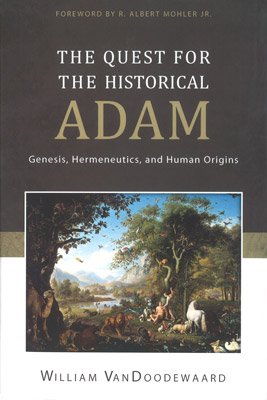
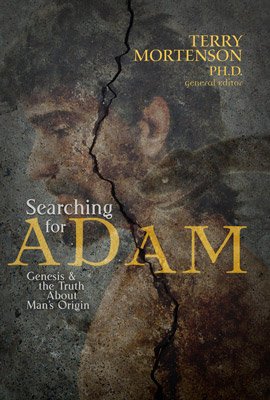
Two Highly Recommended Books on the Historical Adam

New evangelicalism as a whole has caved in on a literal Adam, a young earth, and death before the fall.  Yet they plead with everyone that it has no effect on the gospel or a healthy church.  Yet in droves their young people are leaving their own churches.  It is not the music?  It is not being real, trendy or relevant.  It is simple.  New evangelicalism as a whole has lost their authority found in the scriptures alone.  They want a gospel found in the scriptures but not the historical narratives it is based upon.  Adam was the real first person in a real first historical narrative.  I offer the following two texts for your study.  The church has truly been weakened by years of evolutionary undercutting of biblical authority.  Even worse is the trendy, cool-kid popular pastors who say is doesn't matter.  Pragmatism is still king in evangelical church effectiveness.


The Quest for the Historical Adam by William Vandoodewaard (345 pages)
Forward by Albert Mohler

Synopsis from AiG website, "The Quest for the Historical Adam provides a faith-affirming survey of the theological perspectives on man's origin. Like a crime scene investigator, the author meticulously traces the development, and, at times, disappearance of critical hermeneutical and exegetical insights. This semi-technical book equips readers to stand firm in their faith, and should be read by every Christian leader."


Searching for Adam: Genesis & the Truth About Man's Origin (600 pages)
Edited by Terry Mortenson

From AiG, "
Though there are a growing number of books out on Adam, in this unique book 16 experts present biblical, historical, theological, paleontological, genetics, archaeological, and ethical arguments in defense of the literal truth about Adam and the Fall. In the process you will see the lie that man evolved from some ape-like creature over millions of years. An increasing number of professing evangelical leaders and scholars are doubting or denying a literal Adam and a literal Fall (or at least some of the details in Genesis about Adam), which thereby undermines the gospel of Jesus Christ, the Last Adam, who came to undo the damaging consequences of Adam’s sin and restore us to a right relationship with our Creator. Know that you can be confident in the truth of Genesis and in the gospel!"
Contributing authors are Dr. William Barrick, Dr. David Croteau, Dr. Michael Naylor, Dr. Eugene Merrill, Dr. Tom Nettles, Dr. David Menton, Marvin Lubenow, Dr. Stuart Burgess, David Casas, Marvin Lubenow, Dr. Nathaniel Jeanson, Dr. Jeffrey Tomkins, Steve Ham, Dr. Jerry Bergman, Don Landis, and Tim Chaffey, as well as Dr. Mortenson.
Enjoy!

Friday, October 21, 2016

Why Did God punish Nebuchadnezzar? Is there a Lesson for Our Nation?

Image result for nebuchadnezzar

Why did God punish Nebuchadnezzar?  Is there a Lesson for Our Nation Today?

God did not leave the reader without a motive for his actions.  There is no question and no doubt.  Three times God tells us why he punished Nebuchadnezzar.  Of course his human pride is sin and deserving of punishment.  But why was he punished?  Notice the text of scripture from Daniel chapter four:

Verse 17, "to the intent that the living may know that the most High ruleth in the kingdom of men, and giveth it to whomsoever he will, and setteth up over it the basest of men."

Verse 25, "till thou know that the most High ruleth in the kingdom of men, and giveth it to whom he will."

Verse 32, "until thou know that the most High ruleth in the kingdom of men, and giveth it to whomsoever he will." 

Again in chapter in 5:21,  "till he knew that the most high God ruleth in the kingdom of men, and that he appointeth over it whomsoever he will."

Did you catch the repeating patterns?  Simply put "that...may know."  There is a certain content of knowledge both in person and works which God is intent that all the earth has knowledge.  What two things?  First, God is in absolute control.  He rules as an unrivaled monarchy without democracy or reelection.  Second, He alone tears down and sets up earthly rules according to his own purposes.  He gives countries the leaders they have.  One means by which he does this (at least in our country) is through democratic elections (insert electoral college system).  God has a purpose for what he does and what he allows to happen.  Use whatever adjective you need to for defining the second part (permissive, decree, etc...).

My question is simple:  Is there a parallel for our country in this upcoming election?  Has our country failed here?  Our nation is prideful and rejects the authority of God.  I say this as a soldier who has served our country for nearly fourteen years.  I'm not just an army chair quarterback or a "if I were in charge" opinion creator.  It is saddening to see where our country is heading.  I pray for my children because of the culture they will have to live in and raise their children.

Consider our country:

Want to kill a baby?  Inconvenient?  Redefine life (even the medical folks can get on board).
Want to marry anyone?  Simply redefine marriage (even the lawyers and judges will get on board).
Want to restrain opinions?  Create politically correct speech. Sensor the other's opinion.  Punish for "hate" speech.  Relabel all opinions contrary to your own as "hate" speech.

Do you want leadership that approves or practices the above?  Your choice.  Your vote.

Our nation as whole is in trouble.  Our democratic government has produced what we have now and what or who controls the future of our country.  Just to be clear the format of government does not necessarily produce a better moral product.

I don't mean all doom and gloom but our nation is not on a good course.  Perhaps God needs to completely humble our country.  How will he do it?  What might he do?  Who will he put in charge?  Only God knows.  He will glorify himself.

Hope this helps some.

Comments of course as always encouraged.


Wednesday, September 28, 2016

Music in the Old Testament: Sometimes they call it Prophecy.

Image result for old testament prophecy


Music in the Old Testament. 
Apart from terms such as praise, psalm, and other related terms, one that stands out as special in relation to music is prophecy.  For our consideration of this topic we should briefly overview First Chronicles 25.  Several points emerge from the text which can be useful when wading through the water of the current music and worship war debate.

This text is not new to the issue of music.  It will no doubt be championed by some and ignored by others.  Our main concepts for viewing this passage are two-fold: first, the appearance of the term prophecy, and second, how this term is used and abused in the context of music and worship.

Leadership and Selection

First, leadership was involved in the selection of musicians.  Notice in verse one that the sons of three men Asaph, Heman and Jeduthun were "separated" out for this purpose.  For what were they selected out?  Prophecy.  Is this foretelling the future or adding to an already completed collection of scripture?  This verse defines prophecy (at least in this context) as music with instrumental accompaniment. This musical understanding of the term is repeated in verse three.  As a side note for future articles, the musical writings (at least as has been preserved for us) by these three men have been recorded for us in the book of Psalms.  For example, note Psalm 73, "A Psalm of Asaph."  Taking into consideration that these three authors wrote Psalms (for musical accompaniment) at a minimum implies that the Psalms were meant to be sung with musical accompaniment.  This is further encouraged based on the fact that many Psalms include a specific tune for which to sing that particular Psalm. 

Content and Focus

Second, the content and focus of their music is also made known.  It was for the purpose of giving thanks and praise.  The distinct focus of the music was the LORD (Yahweh).  If this is truly a faithful means for viewing song content then the content of the Psalms should be of utmost importance to us (death, suffering, pain, praise, sorrow, history, righteousness, wickedness, sin).  There is much content in the Psalms for which we can meditate upon.  We do have 150 to occupy our singing.  Seems rather strange that most church don't sing them at all.  I think I can safely say (without refutation) that the vast majority of evangelical denominations sing songs (music) on a weekly basis (without singing one Psalm).  I would guess you would be hard pressed to find more than a handful of Psalms in your local church hymnal.

Training and Dedication

Third (and lastly), these were well-trained men.  Even the well-intended need to take note here.  Yes, lets take for granted not everyone will be able to sing well (I'd be happy if people just sang period).  Anyone who has put forth effort to produce music knows that time and effort has been put forth.  My children every week practice piano.  We pay for lessons and they practice (through much pain, suffering and woe--well, not always).  There must be something to this because God specifically mentions, "all these were under the hands of their father for song" and later "their brethren that were instructed in the songs of the LORD."

If this last one sounds kind of harsh or too restrictive, try to remember which of the twelve tribes were able to participate.  Don't forget the other eleven were not selected.  Remember this when people in 2016 squabble about gender participation and music leading.  Take note of the trends in current new evangelicalism.  Just try to apply a consistent form of regulative principle to Christian music today on the gender issue.  Are you forced to appeal to a historical narrative by desperation?  Any actual prescriptive exhortations?  1 Cor 14?  Mary?  Anna?  Deborah?  

If the text actually matters then we have some weighty ideas to consider.  From here well will turn to the ark of the covenant and the relation it has to worship and music in local churches.  Does God give actual commands and precepts for worship?  What happens when we refuse to listen?  What happens when we decide to do it our own way (even if we had good intentions)?

Hope this helps some.  Comments (as always) encouraged.


Monday, September 19, 2016

The God-Ordained hymnal: The Psalms. God does have a say in this matter.


The God-Ordained Hymnal: The Psalms

It appears as though God does have a say in what text and tune should be used by God's people for worship.  God did provide his people with a hymnal of his own choosing and arrangement.  He provided his people a 150 page (chapter) hymnal.  I can just imagine trying to do this today with a scroll.  The worship/song leaders stands up and says, "Please roll your scroll to Psalm 118."   Can you imagine how long that would take?  Imagine a synagogue full of people rolling their scrolls.  Praise the Lord for the invention of codex.

Just consider a standard page found in an English text Bible.  I turn to a Psalm, let's say Psalm four (150 to choose from). As you quickly glance at the text you see several things. First, a title in bold font Psalm 4 or perhaps Psalm Four (most likely it says Psalm 4).  But look right below that title for Psalm 4.  There's some more information provided for us.  Second, we have the person or sometimes the group for which this psalm was written.  Not on that but many psalms (like this one) include either the musical instrument intended for it, the musical tune, or perhaps even the mood by which it is to be sang or played.  Lastly, many psalms include the human author who wrote under divine inspiration of the Holy Spirit, in this psalm specifically it is called a psalm of David, perhaps Asaph, or maybe we don't no specifically who wrote it.

Perhaps your thinking well that was just added by the translators or by a publishing house.  Think something similar to reading the gospels and the two color font used by some publishers.  The color red denotes the publishers aid to the reader in distinguishing when Jesus is speaking and when his is not.  Here's a point of similarity.  The font whether red or black in an English translation is based on an underlying Greek text.  Question: is there any underlying Hebrew text for these titles and related introductory information?  Check out a Hebrew Old Testament text or find and interlinear.  When you look at the text in Hebrew where is verse one?  Do you translate this way, "Hear men when I call"?  Or do you translate it, "to the chief musician on Neginoth"?  Where is verse one and verse two?  Is there an interesting change occurring between Hebrew and English?

This not the only place in the Old Testament where this concept appears.  Consider also a text like Habakkuk chapter three. Verse one, "A prayer of Habakkuk the prophet upon Shigionoth."  Sounds like many of the psalms.  But look also how chapter three ends, "To the chief singer on my stringed instruments " (v. 19).  Oh, and by the way, there is Hebrew text underlying both of these verses.

One more little piece of evidence remains.  The little word Selah.  The meaning at present is not as important as when it appears.  It occurs to my knowledge 74 times in the Old Testament.  The number itself is not that important either.  When and where does it appear?  Only two books in the entire Old Testament.  Three times in Habakkuk chapter three and guess where else?  The book of Psalms, the God-ordained hymnal.

Perhaps there is more evidence for God determined text and tunes than you might have imagined.  What happens when we sing the Psalms?  Are we singing a text and tune which God chose?  Do you you think God would have chosen tunes that are described as worldly or flesh-arousing?  Let us also remind ourselves historically, that many within church history rejected and opposed the creation of hymns (and a hymnal for that matter).

Here's where another battle begins.  This is apart from the God doesn't care about the tune crowd.  Or God consider's all cultures neutral crowd.  Even to suggest otherwise to many evangelicalism smacks of a warped definition of cultural superiority or racism.  We don't have the exact tune preserved in the text for us.  What do you think a holy and reverent God would choose?

Hope this helps some in this matter.  Comments and questions encouraged.

Some Translation Traditions are Hard to Break (Test Case: Romans 1:3 "Jesus Christ Our Lord" in the KJV 1611)

 Some Translation Traditions are Hard to Break  (Test Case: Romans 1:3 "Jesus Christ Our Lord") If you've every bothered to re...